There is no universal pressure mattress. There is an appropriate surface for a risk level and care plan. Risk, weight, mobility, moisture and the ability to monitor.
Options for this need
Compare what each aid offers and who it may suit.
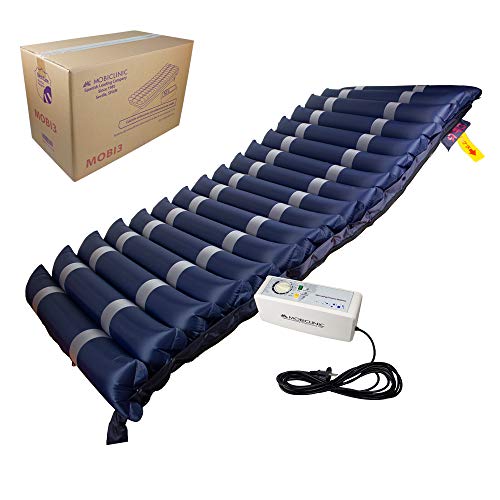
Mobiclinic Mobi 3 17-cell alternating-air mattress
A good fit when: the indication, user weight, base mattress and monitoring routine match the listing.
I would not choose it if: the product is expected to provide all prevention by itself or pump noise cannot be tolerated.

Apex Domus 2 Plus alternating-pressure mattress
A good fit when: alternating pressure has been recommended and the pump, tubing, posture and skin checks can be maintained.
I would not choose it if: it is meant to replace repositioning or treat a wound without supervision.
Affiliate links: we may earn a commission at no extra cost to you.
Assistive equipment does not replace clinical or occupational-therapy assessment when there is pain, a fall, a wound, sudden deterioration or an unsafe transfer.
How to make the decision
A cell-and-pump system marketed for medium risk and lower-grade injuries; it does not replace a care plan.
- Prolonged immobility with a risk assessment
- A compatible 200 x 80 cm bed
- A caregiver able to monitor pressure, skin and alarms
The boundary not to cross
Do not self-treat an open wound by buying an air mattress. Risk category, weight, moisture, nutrition, mobility and skin checks affect the choice.
Seek clinical or occupational-therapy advice for new severe pain, an open wound, a recent fall, sudden weakness, breathing difficulty or inability to control head and trunk. An online guide cannot assess those risks remotely.
A note for the caregiver
Apex is an established clinical range. Check the current seller, pump warranty and replacement availability.
Continue refining your decision
Sources
- NICE CG179 — Pressure ulcers: prevention and managementPrevention, risk assessment, repositioning and pressure-redistributing surfaces.
- International Guideline — Prevention and Treatment of Pressure Ulcers/InjuriesInternational framework for support surfaces and pressure-injury prevention.